
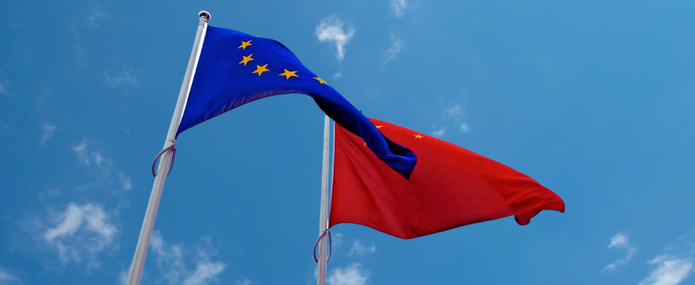
In Davos, European Commission’s President von der Leyen emphasized domestic investments in renewables and grids as a crucial strategy for European energy security, while Chinese Vice Premier He Lifeng highlighted his country’s ambition to close the global green production gap through cooperation. Indeed, globally clean energy deployment is considered to have reached an irreversible tipping point, driven by a rapid surge in China, the European Union (EU) and the United States. However, this hides large disparities, and clean energy remains chronically underfunded across Africa, South-East Asia and Latin America. The EU and China through their overseas investments and official development assistance have a key role to play to fill this gap. A coordinated approach towards third countries, aligned with country needs, could bring a contribution to EU-China cooperation on climate change, in line with the commitment made by their respective leaders on 24 July 2025 to “accelerate the global renewable energy deployment and facilitating access to quality green technologies, so that they can be available, affordable and beneficial for all countries, including the developing countries”. In a new Study (IDDRI, 2026), produced in the context of informal dialogues between Chinese, European and third country experts and think tanks, IDDRI is taking stock of progress and gaps to increase global renewable energy capacity, looking at country-level enablers and barriers in developing economies, presenting the role currently played by European and Chinese overseas investments, and proposing some perspectives for greater EU-China coordination.
Addressing global disparities in renewable energy investments and deployment
China alone is set to account for 60% of the expansion in global renewables capacity by 2030, followed by the US and the EU, and to a lesser extent India. While these trends are very encouraging, clean energy is indeed underfunded across Africa, South-East Asia and Latin America, with only marginal progress over the past ten years ; for example sub-Saharan Africa is accounting for just 2,3% of global installed capacity in 2024.
While the goal of tripling renewable energy globally by 2030 can be achieved without addressing these disparities, the promise of the Paris Climate Agreement was that the new green economy would deliver benefits for all and enable the sustainable development of developing countries, including through greater energy access, green industrialization and other development-related goals. Failing to deliver more equitable benefits will increase fragmentation, threaten global economic stability, and prevent countries from reaching their development goals and build mutually beneficial partnerships. To deploy renewable energy in developing economies, there are shortcomings in foreign direct investments coordination among donors, private sector actors and other investors, as well as issues such as higher cost of capital, lack of investments in grid infrastructure and of an enabling policy environment–that can be addressed through better China-EU coordination.
EU and China investment strategies and complementarities
China’s overseas energy investments show a shift following a decision to end China’s involvement in new coal-fired plants, with 69% of overseas generation capacity directed to solar, wind and hydropower in 2022-2023, compared to 13% in 2000-2021. This masks however an overall decrease of Chinese investments. Since 2023, China has cautiously renewed overseas investments, while shifting from large-scale energy infrastructure investment to a “small and beautiful” strategy, focusing on deploying smaller, more flexible power solutions that are able to reach isolated or off-the-grid communities, at a lower cost and with less local pollution. EU investment in the deployment of renewable energies in developing economies largely predates the Global Gateway, with support for these technologies dating back to 2010. The Global Gateway provides the EU with a framework and strategy for investing in projects in emerging markets and developing countries and a specific funding package was announced in October 2025 to finance projects in Africa in transmission, electrification and renewable generation across several countries.
China’s policy banks, especially the China Development Bank (CDB) and the Export-Import Bank of China (EXIM), are a major provider of energy finance. However, Chinese investments are becoming more commercially driven, with EXIM, CDB and state-owned-enterprises ceding ground to commercial banks and private sector investors, such as Industrial and Commercial Bank of China (ICBC), which are gaining in experience. On the EU side, the Global Gateway aims to better coordinate the use of EU external finance tools, including providers of development finance and private sector partners. While China’s policy banks have historically provided high volume state financing primarily for large-scale projects (with construction and operation of projects generally carried out by Chinese companies), in particular big hydropower projects, EU stakeholders have provided financing for both large-scale and small and medium-scale projects, with a view to catalyzing private sector investment. Both China and the EU are investing equity in funds for the deployment of clean energy and in power infrastructure, such as through the Silk Road Fund for China and through the EIB, DFIs and theme-specific initiatives for the EU.
This analysis shows the potential for complementarity between European and Chinese investment strategies. For example, China’s large-scale finance and Engineering, Procurement and Construction (EPC) contractors, backed by China’s large state-owned insurer, combined with the EU’s financial toolkit that acts as a catalyst for the private sector, with multiple de-risking instruments, can accelerate investment in green industrialization and enhance clean energy access in the least developed economies, alongside measures such institutional capacity-building or debt restructuring as necessary.
Options for enhanced EU-China coordination
IDDRI’s Study led to the identification of options for enhanced EU-China coordination in developing countries, which were discussed in a dialogue convened in October 2025 in Suzhou, China, with European and Chinese experts, academics, think tanks and private sector and experts from third countries covering Africa, South-East Asia and Latin America.
The EU and China could:
- Support instruments, such as country platforms, to enhance the coordination of their investments and achieve catalytic effects, including to leverage private sector finance;
- Build trilateral partnerships centered around recipient country ownership to:
- Enable tailored energy systems approach–inclusive of investments in grids and storage and responding to the country’s expected energy demand trajectory over the medium and long-term;
- Reflect development priorities–when relevant incorporating local content; green industrialization strategies; developing local skills and capacity;
- Developing interoperable sustainable finance taxonomies, building on the EU-China Common Ground Taxonomy, to facilitate cross-border financial flows in support of clean energy and renewables deployment;
- Using multilateral development banks (MDBs) to co-finance projects by EU and Chinese stakeholders to act as a neutral convener, helping de-risk investments and meeting EU Environmental, Social and Governance (ESG) standards. MDBs often possess local knowledge and expertise that increase the success of clean technology projects.
