
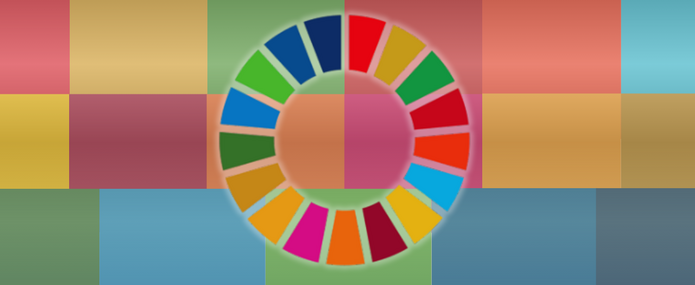
10 years ago, after a three-year innovative and inclusive negotiation process, all Member States of the United Nations adopted an ambitious agenda for sustainable development: the 2030 Agenda and its 17 Sustainable Development Goals (SDGs). The original push for the SDGs had originated in Latin American nations, with Colombia and Guatemala leading the effort to shift the global development agenda from the Millennium Development Goals (MDGs) towards a more holistic framework that addressed economic, social, and environmental issues. The SDGs were envisioned as a transformational and universal agenda for sustainable development, for all countries, but also all actors—national governments subnational authorities, civil society, and the private sector—and the 2030 Agenda’s prioritized the world's poorest and most vulnerable populations (“leave no one behind”). Ten years later, where do these promises and commitments stand? And why do we still need them, up until and after 2030?
The SDGs as the North Star, a Trojan horse, or a toothless tiger?
According to this year’s SDG progress report1, 35% of the SDGs show progress (18% are on track, and 17% are making moderate progress), nearly half are moving too slowly, and around 18% are regressing. Despite this mediocre track record, the SDGs are still considered useful by many (Southern) countries and actors, and have had some success as a framework of reference2 and as a discursive tool, influencing global rhetoric and policy language.
But above all, the 2030 Agenda is, a “deep transformation agenda”3. However, this transformation is both a complex and highly political domestic process, which implies difficult trade-offs4—scaling up certain economic sectors while scaling down others—creating inevitable friction, and a fundamentally international political negotiation5, as rebalancing development inevitably reconfigures global economic power relations. In addition, the SDGs are based on a crucial "do no harm" principle, a commitment to avoiding unintended consequences across the entire framework, which makes cherry-picking impossible; a development goal cannot be pursued in one area while undermining another. This is why the goals are not just about adding new efforts but about transforming existing systems. This transformative ambition also means that the SDGs must serve as the central framework for other critical global agreements. The Paris Climate Agreement and the Kunming-Montreal Global Biodiversity Framework are not separate projects; their success is directly tied to and dependent on SDG implementation. The SDGs provide the overarching roadmap for how these specific goals fit into a broader vision of sustainable and equitable development; they are the essential link that holds the entire agenda together.
While they seem harmless, the SDGs are being under attack. As economist Adam Tooze points out6, this opposition, coming from the Trump Administration for example, stems from a fundamental fear, that embracing the 2030 Agenda would tacitly support a global economic rebalancing that would inevitably come at the expense of U.S. power. And across the globe, far-right parties and political figures like Milei in Argentina are weaponizing the very concept of “sustainable development.” Once seen as an idealistic international agreement without teeth by some, as the North star of multilateralism for others, the SDGs are now portrayed in narratives of the global extreme right as tools of globalist overreach.
SDG-aligned initiatives
Some positive dynamics that could be the starting point of a kind of “we are still in”, more implementation-oriented movement, coming from subnational actors and civil society actors who show more engagement, as well as those private corporations which have embraced a sustainability rhetoric linked to the SDGs, for example at the SDG Global Business Forum. Such initiatives include the UN Global Compact, where thousands of companies pledge to align their operations with the SDGs and report on their progress; similarly, major international reporting frameworks like the Global Reporting Initiative (GRI) now provide specific guidelines for companies to measure and disclose their contributions to the SDGs. As for public development banks (PDBs), they have steadily moved from peripheral actors to central implementers of the 2030 Agenda by adopting explicit SDG-alignment frameworks and collective commitments that reorient their portfolios and operating modalities. IDFC7 members have set up an SDG alignment working group and produced practical guidance to help national and regional development banks measure and steer investments toward SDG outcomes.8 The Finance in Common Summit has reinforced this shift through joint declarations and annual summits that promote peer learning, common standards and blended-finance approaches to scale sustainable projects. PDBs can act as catalytic investors—pooling concessional finance, sharing project risks, and providing long-term patient capital that crowd-in private investors for transformational, just transitions. Another interesting example is Colombia that linked its 2016 peace agreement with the FARC to the SDGs to address the root causes of the conflict and has aligned its national development and investment plans with these goals.
A compass for new strategic alliances
Emerging economies in the Global South have also increasingly “framed their aid and investment efforts in the context of the SDGs”9. European countries—which have historically ranked high on the annual SDG Index—have an interest in defending this multilateral agenda as a basis of shared interest and values with important middle powers such as Brazil, South Africa, Indonesia and India. The G20 has increasingly focused on the 2030 Agenda, with the last four presidencies—Indonesia, India, Brazil, and South Africa—placing it at the core of their agendas, with the final Leaders' Declarations highlighting the importance of international cooperation to address challenges such as climate change, poverty, and inequality.
The SDGs might look out of time and overly idealistic in times of moral decay in global cooperation. Or they could be seen as a relevant compass for discussing shared values and interests with strategic partners and allies. Officially, they are still standing and supported by a vast majority of countries around the globe. The United States has therefore isolated itself in the FfD4 (Fourth International Conference on Financing for Development) process by opposing the inclusion of explicit references to the 2030 Agenda in the final document.10 This move ultimately failed, and the Compromiso de Sevilla, which contains numerous references to the 2030 Agenda and the SDGs, demonstrating that the international community maintains its ambition and commitment to this common development framework, was adopted by consensus.
In a world increasingly defined by geopolitical power struggles, the SDGs offer a crucial alternative: a basis for shared, mutually beneficial partnerships. By addressing key vulnerabilities like energy dependence, resource scarcity, and supply chain fragility, the 2030 Agenda goes beyond altruism. It provides a common language for nations to align their strategic interests with global development goals. This approach reframes sustainability not just as a moral imperative, but as a path to enhanced national security and collective resilience. Instead of a naive, idealistic project, the SDGs could still become a powerful tool to forge new alliances11 and build lasting solidarity in an interconnected yet unstable world.
Beyond the 2030 deadline, a new theory of change?
The 2030 deadline for the SDGs is fast approaching, but with many targets off track, the world faces a critical question: what happens next? Will the international community simply extend the goals to 2040, or will it be time to renegotiate the framework? In the current geopolitical context, backsliding on commitments and ambition would be likely.
The success of the 2030 Agenda ultimately depends on a revised and more effective theory of change. The initial blueprint for a universal and transformative agenda proved to be far more complex in practice, hindered by conflicting economic priorities and political realities. A more strategic approach may be needed to redefine how the SDGs are implemented. This means moving beyond a one-size-fits-all model and accepting that different global powers are already developing their own approaches. For example, China is already adapting its own "theory of change" for sustainable development.12 In this context, the European Union, which has historically been a strong defender of the multilateral agenda, should consider proposing its own strategic framework. This would involve a more explicit link between its internal strategic interests and its external partnerships13, reframing the SDGs as a path to enhanced collective resilience and shared security, not just a moral ideal. This kind of proactive approach could offer a new direction for global cooperation and help forge strategic alliances around shared interests.

