
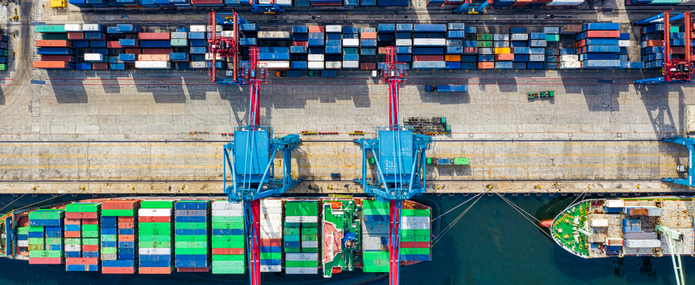
What if the key to decarbonizing freight was not just cleaner trucks, but fewer trucks, shorter distances, and smarter logistics? A bold initiative to reduce transport energy demand by 25% by 2035 about to be launched by Chile, Brazil, and other countries highlights that reaching net-zero in transport is not only about switching fuels. “Avoid & Shift” strategies—like reducing freight demand, shortening supply chains, and shifting to low-carbon modes of transport—offer powerful, often overlooked levers to reduce transport energy demand. Such structural changes should become a cornerstone for low-energy and more sustainable net-zero freight systems worldwide.
Note: this blog post will not include discussion on the maritime and aviation sectors.
Context
Reaching the Paris Climate Agreement’s objective of carbon neutrality requires all sectors to cut emissions as much as possible. Today, transport emissions are not on track. The sector is one of the major sources of emissions, with continuous growth since 1990 at an annual average of 2%, increasing faster than any other end-use sector. This is mainly due to accelerating demand, greater distances travelled, a road-dependent transport system, and a strong fossil fuel dependency. However, this situation can be reversed if systemic transformations articulating avoid, shift and improve strategies and considering the different national circumstances are implemented (IDDRI, 2024).
Analyses of current national transport action highlight that freight transport is overlooked, with very limited measures, compared to passenger transport, even though it represents about 40% of global transport emissions and plays a vital role for industrial development. More importantly, when freight is addressed, most measures focus on “Improve” strategies which support a continuity in freight demand and logistics organizations, and rely on new technologies for road vehicles, such as advanced biofuels, electric vehicles and new digital technologies, aiming at improving energy efficiency and moving away from carbon-intensive fuels. This focus on technology often neglects structural “Avoid & Shift“ strategies to reduce unnecessary or unwanted tonnes and kilometers, and to develop a multimodal logistics with more rail, inland-waterways and coastal shipping than road freight logistics. These two strategies are not only critical for mitigation in reducing energy consumption and facilitating electrification of road vehicles, they also provide significant co-benefits for human well-being, as for example less battery needs, less road congestions, less road accidents.
According to research conducted by the Deep Decarbonization Pathways network (DDP, 2023), these “Avoid & Shift” strategies on freight rely on the articulation and implementation of four key organizational transformations related to (a) producing and consuming sustainably (reduce, repair, reuse, recycle) to lower unnecessary freight demand; (b) producing goods closer to consumers to reduce kilometers travelled; (c) developing more and better inland waterways and costal (IWWC) freight, rail freight, cargo biking, storage and logistics infrastructures and services integrated into the industrial organizations; (d) changing consumption, production and logistics patterns and organizations to reinforce the attractivity of non-road logistics services in terms of costs, time and quality.
The role of international cooperation
International cooperation on freight also remains largely focused on “Improve” strategies—particularly the development and deployment of zero-emission vehicles and refueling infrastructures. For example, the Road Transport Breakthrough initiative brings together governments, companies, NGOs, and researchers to accelerate progress on electrification and its supply chains, including batteries, charging infrastructure, and trade conditions, both for passengers and freight. This is a critical piece of the decarbonization puzzle.
However, the effective implementation of the four abovementioned key organizational transformations partially depends on national actions but can also be triggered by an enhanced international cooperation around (i) experience-sharing on national policies, (ii) international technical assistance programs, (iii) international financing conditions and (iv) other international legal instruments related to production, trade or transport.
For example, the transformation (c) related to the development of non-road and logistics infrastructures and services could be accelerated by a mix of cooperation initiatives like:
structuring experience sharing on governance, planning and participatory processes to design an integrated planning between industrial, logistics and freight transport infrastructures;
enhancing technical assistance programs to support effective knowledge transfer in terms of planning and building these infrastructures;
adapting international finance programs and conditions to best support local investments in these infrastructures;
enhancing requirements in rail transport agreements to better include regional rail interconnectivity and interoperability.
Recommendations
Despite efforts led by the Climate Champions, there is yet no structured international cooperation agenda on the implementation of “Avoid & Shift“ strategies for freight. This might change in the coming years, as opportunities will be created through the UN Decade of Sustainable Transport 2026-35 and the next 2026-28 UNFCCC’s Global Stocktake.
Recommendation 1: Structuring an international cooperation agenda on the “Avoid & Shift” strategies
The international community should establish a dedicated international cooperation agenda on the “Avoid & Shift” strategies. This could possibly be organized in the context of the Breakthrough Agenda, as a complement to the current agenda focused on “Improve” strategies. The focus would be on structural public policies on production, consumption, trade and transport, and investments consistent with low-energy and sustainable industrial and freight development compatible with carbon neutrality.
With this practical objective in mind, this cooperation agenda should be structured around the four key organizational transformations:
(a) developing circular production and consumption;
(b) shortening supply chains;
(c) developing non-road and logistics infrastructures and services integrated into industrial organizations;
(d) changing industrial and consumer’s behaviors related to transport service levels
Recommendation 2: Involving a diversity of stakeholders and experts in the “Avoid & Shift” cooperation agenda
The “Avoid & Shift” cooperation agenda should confront perspectives on i) the barriers and enablers of each transformation, ii) the challenges and opportunities of different forms of cooperation, and iii) the regional- or country-specific sociocultural, economic, development and policy circumstances. To do so, the discussions should include a diversity of stakeholders and experts:
the key implementation actors, namely shippers and producer representatives, infrastructure developers, logistics service providers, rail and IWWC transport carriers, and consumer NGOs;
the key international cooperation actors, namely local and national policy makers, experts of international legal instruments related to production, trade and transport, private finance sector representatives, public cooperation entities;
a mix of experts and decision-makers from developed and developing countries, able to convey diversity of perspectives.
Recommendation 3: Informing the “Avoid & Shift” cooperation agenda with country-driven inputs
To engage with national policymakers and be relevant to different country contexts, the agenda should be informed by country-specific analysis of net-zero “Avoid & Shift” transformations, exploring the conditions to transform industrial and freight systems consistently with the carbon neutrality objective and domestic development goals given specific country circumstances. As such, the “Avoid & Shift” agenda can provide direct inputs to current national processes on net-zero development plans. It can also inform global conversations by extracting cross-country policy lessons from country-driven inputs and examples reflecting different country circumstances. A co-benefit with such a needs-based approach is that all participants can benefit directly from this cooperation workstream, which can feed their own objectives and agenda, which create suitable conditions for continuous engagement by participants.
Similar recommendations could be drawn for « Avoid & Shift » strategies for passenger transport. But, as passenger and freight mobility systems correspond to two different socio-economic systems, with different actors, different constraints, different forms of regulations and policies, different infrastructures, it would probably be relevant to have two distinguished segments in each « Avoid & Shift » and « Improve » cooperation workstream.


