
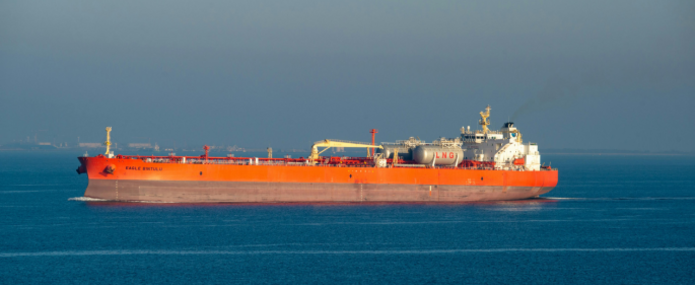
The military attack launched on 28 February 2026 by the United States and Israel against Iran has spread to the whole Gulf region, generating a new wave of geopolitical instability which is impacting the production and flow of oil and gas and some industrial products. Although the European Union's dependence on fossil fuels from the region is limited, it is exposed to spillover effects via global energy and commodity markets. While the situation remains uncertain and some could use price hikes as an opportunity to further weaken climate ambitions, this crisis once again demonstrates the urgency to phase out fossil fuels.
The Gulf region, a hub under high tension
The Persian Gulf1 holds a special position in the world’s energy landscape: it accounts for around 30% of global oil and 20% of global gas production, while also holding the majority of proven reserves.2 The region's oil and gas exports are mainly destined to Asia (80%), but they also account for 20% of European oil imports and around 5% of fossil gas imports. In addition, the Strait of Hormuz plays a crucial role in global trade: it handles one-fifth of the world's oil and gas traffic, as well as many other industrial raw materials.
High uncertainty about how the situation will develop
Following the offensive launched by the United States and Israel, Iran retaliated by attacking several neighbouring countries, including shutting down Qatar's liquefied natural gas (LNG) production and blocking shipping through the Strait of Hormuz. Global energy markets reacted quickly: as of 9 March 2026, the price of oil (Brent) had risen by 50% compared to early 2026, reaching over $100 per barrel, while the European fossil gas spot price had doubled, rising from less than €30/MWh at the beginning of 2026 to over €60.3
In the case of oil, the rapid decline in production and exports from the Gulf is driving up prices until other producers (the United States and OPEC countries)4 can increase their production to adjust supply. In the very short term, G7 countries and China5 could release part of their strategic reserves to increase market liquidity and limit price hikes.
On the liquefied natural gas (LNG) market, the situation is quite different from the 2022 crisis (following the invasion of Ukraine), when the sudden loss of Russian gas (40% of European supply) put Europe under high pressure, with prices on average above €130/MWh in 2022.6 Losing Gulf LNG mainly affects China and other Asian countries, but it is likely to lead to increased competition between European and Asian buyers to attract LNG supplies from other areas. In the very short term, markets will adjust by increasing prices as LNG cargoes are rerouted .
What happens next will depend on how quickly new liquefaction capacity planned for early 2026 is commissioned and how the conflict in the Gulf develops, particularly whether production and traffic in the Strait of Hormuz resume.
At this stage, European markets seem to be betting on a rapid resolution of the crisis in the gas and electricity markets.7 However, according to a study by the Oxford Institute for Energy Studies, LNG prices could exceed €90/MWh if the Strait of Hormuz remains blocked for several months.
Europe's dependence on fossil fuels, a persistent source of vulnerability
Since 2022, the European Union has significantly reduced its dependence on Russian gas, from over 40% in 2021 to 13% in 2025, and is aiming to completely eliminate imports from Russia by the end of 2027. This was achieved mainly by reducing gas consumption (-15% between the pre-crisis reference period and 2025) and a sharp increase in LNG imports, particularly from the United States, which have quadrupled between 2021 and 2025 to reach 850 TWh and 27% of the total in 2025. If the highly controversial agreement on energy cooperation between the EU and the United States is upheld, American LNG could account for 40% of European fossil gas supply in 2030.8
As dependence on imported fossil fuels is increasingly used as a political tool, this vulnerability raises questions about the European Union's energy policy and highlights the limitations of its supply diversification strategy, while emphasizing how urgent the low-carbon transition is.
Despite progress made by the Green Deal and the REPowerEU plan, Europe is still too slow in implementing electrification and energy efficiency, which are the only way to sustainably end dependence on fossil fuel imports (as explained by IDDRI in a March 2022 Policy Brief). The European electrification rate has been stagnating for five years. In 2025, fewer heat pumps were installed in Europe than in 2023, while fossil gas consumption increased between 2024 and 2025. However, by accelerating its energy transition policies, the EU could significantly reduce its fossil gas consumption, eliminating all external dependence except for Norwegian and British gas by 2040.
Ways out of the crisis for the EU
This new crisis comes at a pivotal moment, when the European Union is facing increasing internal criticism of its climate policies, as evidenced by recent calls from national governments and industry leaders to weaken the European emission trading scheme and delay its expansion, or to lower CO2 emission targets for new vehicles.
The rise in gas and oil prices observed since the conflict therefore poses a significant risk to the progress of the energy transition: as in 2022, it risks triggering untargeted energy price cap policies, while being used to argue for further weakening climate ambition under the pretext of protecting competitiveness and purchasing power.
But this argument misses the point: it is not decarbonisation policies, but imported fossil fuel dependence weakening the European economy and widening the competitiveness gap. The 2022-2024 energy crisis cost Europe €600 billion in additional energy bills compared to 2021, including more than €200billion paid to Russia, and €650 billion in price freezes and support to consumer bills; money which could have financed decarbonization and reindustrialization policies, while providing targeted aid to the most vulnerable.9
This new context requires the EU to strengthen its transition policies by resolutely supporting the end-use electrification and industrial decarbonization, which are the only ways to guarantee energy, economic and political autonomy in an increasingly unstable geopolitical environment. The development by Member States of ‘national diversification plans’ for Russian fossil fuels (initially expected by 1 March 2026), and the publication of electrification action plans by France (scheduled for April 2026) and the EU (scheduled for July 2026) are all opportunities to strengthen the ambition to phase out fossil fuels.
- 1
Iran, Iraq, Kuwait, United Arab Emirates, Saudi Arabia, Bahrain, Qatar.
- 2
Iran alone accounts for around 4.5% of global oil production and 6.5% of gas production; 90% of its oil and gas exports go to China.
- 3
Similarly to the 2022 energy crisis, oil and gas prices are considered especially sharp because they were at particularly low levels shortly before. Gas (€25/MWh) and oil (USD60/barrel) prices at the end of 2025 were in some cases, far below the level reached after the Russian invasion (around €30-40/MWh for gas and USD70-80/barrel for oil).
- 4
Algeria, Equatorial Guinea, Gabon, Iran, Iraq, Kuwait, Libya, Nigeria, Republic of the Congo, Saudi Arabia, United Arab Emirates, Venezuela.
- 5
China imports 40% of its oil from the Middle East. However, it has oil reserves equivalent to those of all G7 countries combined (more than 1.2 billion barrels).
- 6
In 2022, the impact of the crisis was all the greater for Europe due to a combination of factors that led to increased tensions on the global gas market: China's post-COVID economic recovery was faster than anticipated, and a significant portion of France's nuclear power capacity (-80 TWh) was unavailable, which led to increased reliance on gas-fired power plants across Europe.
- 7
Price increases on the French gas and electricity market are currently limited to deliveries in 2026, with a slight risk premium for wholesale 2027 prices. This is despite relatively low gas storage levels (less than 30% for France and Germany) due to a comparatively harsh winter.
- 8
This dependence also directly finances the American war effort. If gas prices stabilize at current levels, the EU would pay an additional €25 billion for US LNG in 2026. If import volumes increased sharply (+50%) to fully offset the decline in Russian and Qatari imports, the additional cost could go up to €38 billion.
- 9
By way of comparison, the French think tank I4CE estimates that an additional €350 billion per year in investment is needed for the transition at European level.

